
Three Holy Days. One Prophetic Picture.
Download our free guide, “Celebrate Israel’s High Holidays”, and discover how these three feasts reveal God’s redemptive plan from Rosh Hashanah (New Year) to the Feast of Tabernacles.
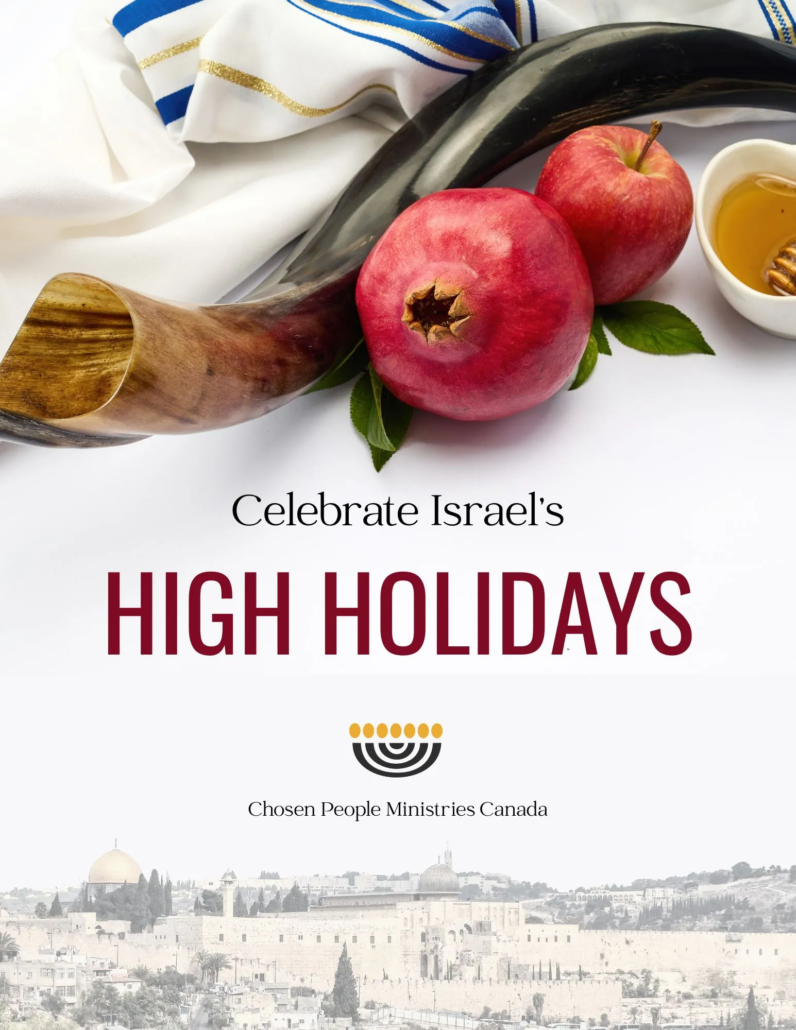

Download our free guide, “Celebrate Israel’s High Holidays”, and discover how these three feasts reveal God’s redemptive plan from Rosh Hashanah (New Year) to the Feast of Tabernacles.

ROSH HASHANAH, or “the head of the year,” marks the beginning of the Jewish new year. It is also the launch of the Ten Days of Awe which lead up to Yom Kippur, the Day of Atonement. Rosh Hashanah is also known as the “Feast of Trumpets,” because the ram’s horn (or shofar) was sounded in the Temple to call people to repentance.

YOM KIPPUR or “the day of atonement”, is the most solemn day of the Jewish calendar. In the Old Testament, the high priest was called upon to present a bull as a sacrifice for sins — and on this one day of the year, to enter the Holy of Holies and present an offering at the mercy seat of the Ark of the Covenant, which was said to be where God dwelt.

SUKKOT, the Feast of Tabernacles, a week-long celebration in which many Jewish people build temporary shelters. The feast reminds them of their wandering forefathers who lived in tents as they roamed the desert. In the Bible, this feast is also referred to as the “Feast of Ingathering,” and celebrates the reaping of crops at harvest time.
